Friends of Bungala River Newsletter March 2026
The Friends would like to thank all our volunteers over the past year for their valuable help and knowledge they bring to our group. Our volunteer hours added up to 842 in 2025!!
Our efforts for 2025 concentrated on planting a further 650 plants in various sites throughout the Park and the Estuary. We also weeded, mulched, replaced corflute guards with wire guards to accommodate the growth of the plants, and watered the new and previous plantings to ease them through the drought conditions of the first half of 2025. We have discovered that mulching plants results in higher survival rates through the dryer months. We planted later in 2025 due to the drought but were lucky it rained in the latter months of the year to help the plants establish.
A new site for 2025 was the southern end of the Park’s footbridge, where 100 Native Grasses consisting of 6 different species were planted. We will expand this site in 2026 with more native grasses, thus creating a useful seed bank for future re-vegetation.
There are 3 other sites in the Park, where we are endeavouring to revegetate as they would occurred naturally in a bushland setting i.e. have a mixture of plants from low to high. These include grasses, ground covers, bushes low and high, climbers and trees. In these sites the trees and high bushes have been established now, some are up to 15 yrs old, so in 2025 we concentrated on including ground covers, grasses and low bushy plants and will continue to do this in 2026.
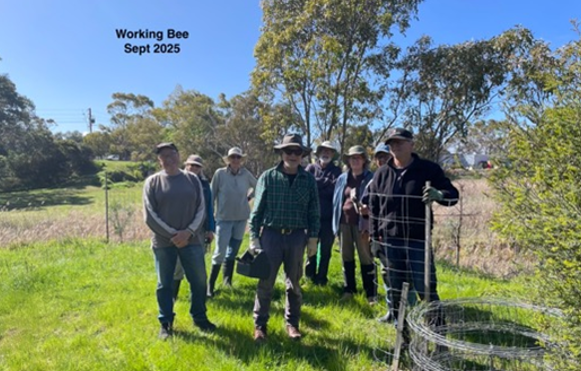
In the Bungala Estuary site, there was a concentrated effort to begin removing the feral Olive trees and the large Briar bushes, particularly along the South Rd section. Thanks to Wayne Gibbs and his trusty band of volunteers that meet every Friday morning for making this happen. The progress of this work can be easily observed when walking along the path adjacent to South Rd after the bridge. Lots of plants were also planted in the Estuary site to begin the transformation from being an Olive infested site to a Revegetated Wetland. In 2026 the Olive control and Native plantings will continue.
In 2025, we adopted the idea of creating pods in which there are a concentration of plants in a small fenced off area. The plants are protected from grazing animals, no plant guards are needed, and weeding, mulching and watering can be more easily achieved in these smaller defined areas. The plants can grow more naturally as they are not confined in a plant guard which often shapes them. Also, plants are not eaten as they outgrow their guards which is a problem due to so many kangaroos in this area. Hopefully this will lead to creating a more successful reveg area.
One of the trees that has been part of the revegetation of the Park is Acacia retinoides (Yankalilla Bay variant), more commonly known as the Normanville Wattle. This wattle only occurs in our local area. It likes growing in sandy, well-drained soil in a sunny position and is drought and frost resistant. It is a tall tree with rough dark bark, growing up to 6m tall and 6m wide depending on how fertile the soil is. It has creamy to lemon yellow clusters of ball shape flowers from October through the summer months, providing some food for insects and birds when other flowers are scarce. Propagation is by scarified seed or soaking it overnight in initially hot water.
Acacia retinoides(Yankalilla Bay taxon) Common name Normanville Wattle
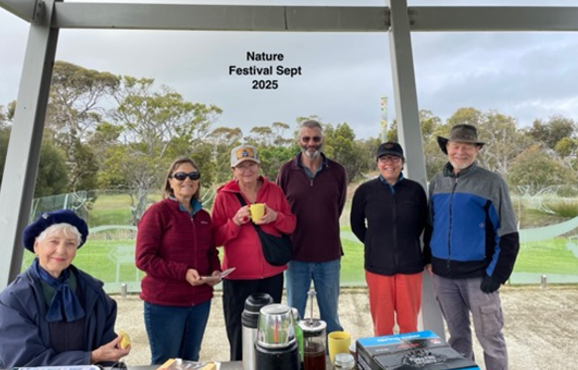
The Friends of Bungala River aim to keep developing and improving the Park for the community to enjoy. In 2025 we introduced Bungala Park, by holding Walk Through sessions, to the Yr 3-4 classes from Yankalilla Area School. We also participated in The Nature Festival by holding an Information and Walk in the Park event. We look forward to helping with the establishment of gardens in the new Dog Park this year.
Our Working Bees are on the 3rd Friday of each month for anyone interested and Wayne holds Working Bees in the Estuary site every Friday Morning.
Contact us at the Fleurieu Environment Centre in Normanville or Email at fobr@flec.com.au
We encourage the local community to walk through and explore Bungala Park to experience the birds and its everchanging environment.